

New Research Reveals link between long COVID and Eye Health
 A groundbreaking study, published in the Journal of Imaging, is shedding light on the long-term effects of COVID-19 by examining a surprising diagnostic tool: the eyes. Researchers have discovered that retinal imaging may provide a novel way to track and understand the lingering effects of long COVID, potentially revolutionising diagnosis and management of the condition.
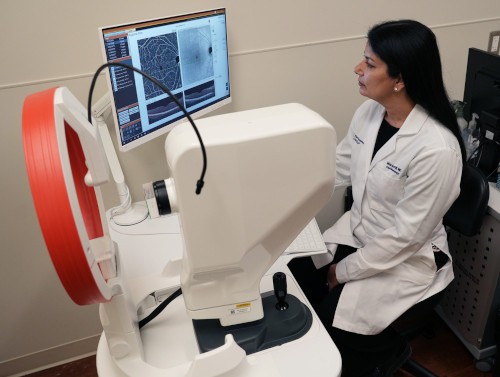
The study, conducted at the Northwestern Medicine Neuro COVID-19 Clinic, analysed the retinas of non-hospitalised long COVID patients. Using advanced imaging techniques, researchers found a significant reduction in the density of blood vessels in the deeper layers of the retina compared to healthy individuals. This suggests that long COVID could be impacting blood circulation in the body, particularly in the brain.
“This finding bridges gaps between ophthalmology, neurology, and COVID-19, helping us better understand how inflammation affects different organs in the body,” said Dr. Manjot K. Gill, senior author of the study and ophthalmology lead at the Northwestern Medicine Comprehensive COVID-19 Center. “The change in blood vessels in the deep part of the retina supports the hypothesis that long COVID affects similar blood vessels in other parts of the body, like the brain, which can potentially contribute to symptoms such as memory loss, brain fog, and fatigue.”
The study aligns with the growing field of oculomics, which examines the relationship between eye health and systemic diseases. Retinal imaging has been used to detect early signs of diabetes, cardiovascular disease, and neurodegenerative disorders. Now, this research suggests that long COVID could be added to that list.
“Retinal imaging allows us to see the blood vessels that we cannot readily image elsewhere, so in this context, the eyes really are the ‘window to the soul,’” Dr. Gill explained.
The findings also suggest that retinal imaging could serve as a non-invasive tool to track the progression of long COVID, providing valuable insight into disease mechanisms that are not yet fully understood.
Building on these initial findings, Northwestern Medicine researchers are launching a longitudinal study to explore how changes in retinal blood vessels correlate with long COVID symptoms over time. Their goal is to determine whether retinal imaging could serve as a diagnostic and predictive tool for the condition.
This research is critical as an estimated 17 million adults in the U.S. continue to suffer from long COVID, resulting in significant healthcare and economic burdens. According to Dr. Igor Koralnik, chief of neuroinfectious diseases and global neurology at Northwestern Medicine, long COVID is responsible for approximately US$600 million in lost wages.
“There are currently no specific treatments for long COVID, and this research helps to advance our understanding of the condition,” Dr. Koralnik said. “By studying the effects of COVID-19 on the body, we can improve diagnosis, management, and support for those affected.”