


New Eye Resolution Study Challenges Display Industry Claims, Offers Insights for Vision Care Professionals
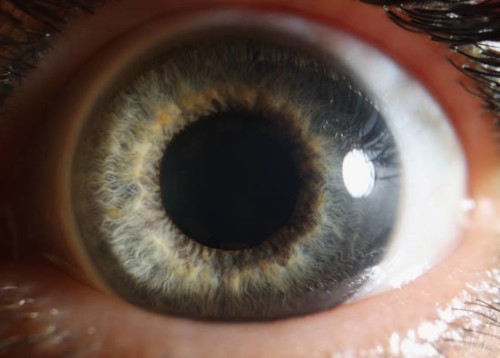 Researchers at the University of Cambridge and Meta Reality Labs have quantified the human eye's resolution limit, revealing that most ultra-high-definition displays deliver more visual information than the eye can actually perceive. The findings offer valuable context for optometrists counselling patients about screen-related vision concerns.
The study, published in Nature Communications, measured participants' ability to detect fine details in colour and greyscale images under various viewing conditions, providing optometric professionals with evidence-based data about the eye's actual capabilities when viewing digital displays.
Implications for Patient Counselling
The research found that for typical home viewing distances of approximately 2.5 metres from a 44-inch television, 4K or 8K resolution offers no perceptible advantage over Quad HD displays of the same size. This suggests many patients investing in premium displays for perceived eye health benefits may be exceeding their eyes' natural detection capabilities.
"As large engineering efforts go towards improving the resolution of mobile, AR and VR displays, it's important to know the maximum resolution at which further improvements bring no noticeable benefit," said lead author Dr Maliha Ashraf from Cambridge's Department of Computer Science and Technology.
The findings have particular relevance for eyecare practitioners addressing patient concerns about digital eye strain, screen quality, and the growing adoption of virtual reality devices in both entertainment and therapeutic applications.
Understanding Visual Acuity in Digital Contexts
Rather than measuring traditional display specifications, the researchers used pixels per degree (PPD), the number of pixels fitting into a one-degree slice of the viewer's field of vision. This metric offers a more clinically relevant assessment of how displays interact with human visual perception at various distances.
The widely accepted 20/20 vision standard, based on the Snellen chart familiar to all optometrists, suggests humans can resolve detail at 60 pixels per degree. However, this measurement had never been validated for modern digital displays.
"This measurement has been widely accepted, but no one had actually sat down and measured it for modern displays, rather than a wall chart of letters that was first developed in the 19th century," said Ashraf.
The study revealed the eye's resolution limit is higher than the traditional standard suggests, but with important distinctions based on viewing conditions. For greyscale images viewed centrally, the average was 94 PPD. Red and green patterns registered 89 PPD, while yellow and violet patterns dropped to 53 PPD.
Colour Perception and Peripheral Vision
The research highlights significant differences between central and peripheral vision capabilities, as well as between colour and monochromatic perception, insights directly relevant to understanding how patients experience digital devices throughout their daily activities.
"Our brain doesn't actually have the capacity to sense details in colour very well, which is why we saw a big drop-off for colour images, especially when viewed in peripheral vision," explained co-author Professor Rafał Mantiuk from Cambridge's Department of Computer Science and Technology. "Our eyes are essentially sensors that aren't all that great, but our brain processes that data into what it thinks we should be seeing."
This finding may help optometrists explain to patients why display quality perception varies under different viewing conditions and why certain visual tasks feel more demanding than others, even on high-quality screens.
Clinical Applications and Patient Education
The researchers modelled their results across population segments, enabling analysis of resolution limits for different percentages of viewers rather than average observers alone. This approach mirrors clinical practice, where optometrists must account for individual variation in visual acuity and colour perception.
The team has developed a free online calculator allowing professionals and consumers to determine optimal screen specifications based on room dimensions, viewing distance, and display size, a potentially useful tool for practitioners advising patients on ergonomic workspace setup or home viewing arrangements.
Relevance to VR and AR Applications
With virtual and augmented reality technologies increasingly used in vision therapy, low vision rehabilitation, and binocular vision training, understanding the eye's resolution limits has direct clinical applications.
"Our results set the north star for display development, with implications for future imaging, rendering and video coding technologies," said co-author Dr Alex Chapiro from Meta Reality Labs.
The research provides eyecare professionals with scientific grounding when discussing display-related patient concerns, from parents questioning whether high-resolution tablets affect children's developing vision to older patients wondering if premium displays might reduce eyestrain.
Evidence-Based Recommendations
The findings suggest that many patients' complaints about visual fatigue or eyestrain from digital devices may relate more to factors such as viewing duration, lighting conditions, blink rate, and working distance rather than display resolution itself, supporting the importance of comprehensive digital device counselling in clinical practice.
For optometrists fielding questions about optimal display specifications for work or home, this research provides evidence that beyond certain thresholds, higher resolution offers no perceptual benefit, potentially redirecting patient investment toward more clinically relevant factors such as proper lighting, screen positioning, and regular eye examinations.