
Google Returns to Smart Eyewear Market with AI-Powered Glasses in 2026
 Google has announced its return to the connected eyewear sector with plans to launch AI-powered smart glasses in 2026, marking a fresh attempt to crack the wearable technology market following the commercial failure of Google Glass in 2013.
The tech giant revealed its ambitious strategy during The Android Show: XR Edition event on 8 December, unveiling a comprehensive approach to extended reality (XR) that includes multiple device categories built on its new Android XR platform.
Dual Strategy for Consumer and Professional Markets
Google is pursuing two distinct product lines in collaboration with eyewear partners Gentle Monster and Warby Parker. The first category comprises screen-free AI assistance glasses featuring built-in speakers, microphones and cameras for voice interaction with Google's Gemini AI. These devices are designed for hands-free assistance throughout the day, including photography and real-time information queries.
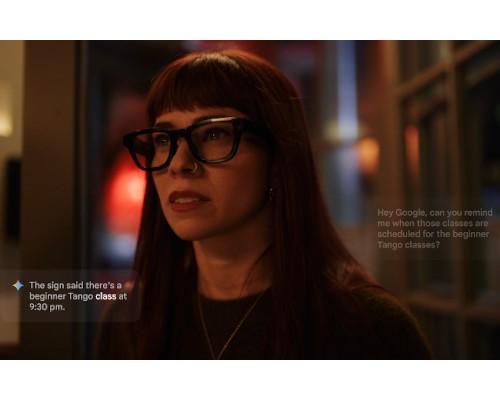
The second category introduces display-equipped AI glasses with in-lens projection technology, offering wearers private visual information including turn-by-turn navigation and live translation captions. Both product types are scheduled for release in 2026.
"We want to give you the freedom to choose the right balance of weight, style and immersion for your needs," said Shahram Izadi, VP and GM of XR at Google.
Entering a Competitive Market
Google's re-entry comes as the smart eyewear market experiences significant growth. According to Google's announcement, sales of AI glasses surged by more than 250 percent in the first half of 2025. The company will compete directly with Meta, whose Ray-Ban Meta smart glasses have sold two million units and established a foothold in the consumer market.
The Android XR ecosystem also extends to wired XR glasses. Google showcased Project Aura from XREAL, featuring a 70-degree field of view with optical see-through technology that overlays digital content onto the physical environment. These devices are positioned for practical applications such as following floating recipe videos while cooking or accessing step-by-step repair guides.
Developer Preview Opens New Opportunities
Google has launched Developer Preview 3 of the Android XR SDK, officially opening development for AI glasses. The update provides developers with APIs to create augmented experiences similar to those demonstrated by partners including Uber and GetYourGuide. The SDK also includes enhanced functionality for headsets and wired XR glasses.
The announcement suggests potential implications for optical professionals as smart eyewear technology becomes more sophisticated. With major technology companies investing heavily in AI-powered glasses, the convergence of vision correction and digital enhancement may create new opportunities and challenges for the optical industry.